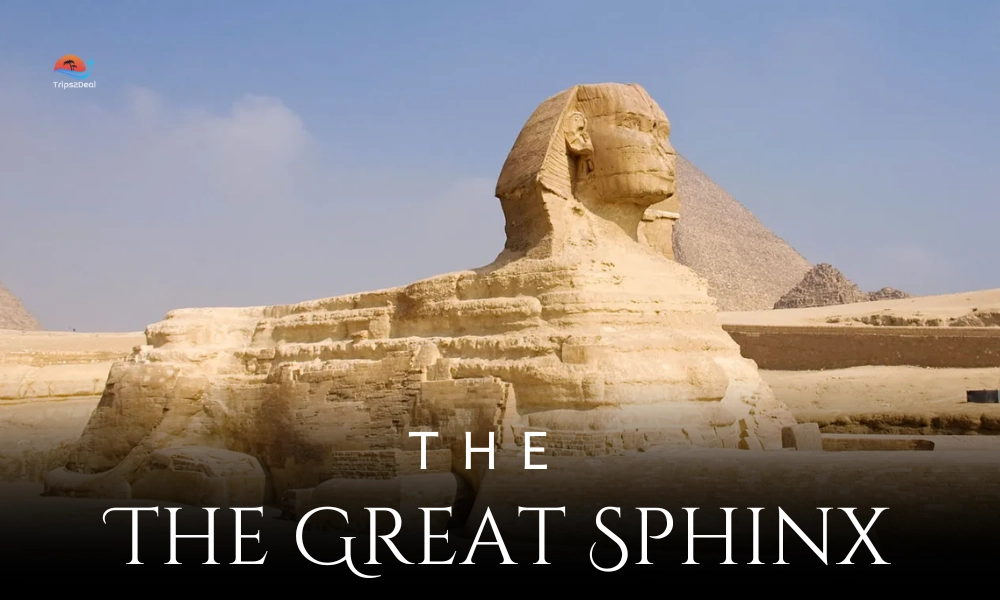

Imagine you’re standing in a plain valley, in front of the Great Sphinx of Giza, it seems like a history more than a decorative piece. It looks like its massive bulk is stepping into a time warp. This is a spot where a visitor, traveler, or history seeker meets with ancient cultures and traditions. For many years, it has exerted its influence on religion. Science and the arts. Before dawn, when a star lights up at Giza, the glow against the desert horizon never fades away.
For almost 4500 years, the Great Sphinx of Giza has been constructed and attached to the dunes of the Giza Plateau. It has used an extreme limestone in its construction, showcasing that it is the most well-known piece of art of Ancient Egyptian culture. It is situated in front of the Pyramids of Giza, becoming one of the most timeless, symbolic, and iconic monuments. The length of the Sphinx of Giza is 73 meters long and 20 meters high. It is the biggest and unique statue ever crafted.
The Sphinx is one of the most photographed landmarks in the world.
The Great Sphinx of Giza is the most mysterious building in the world. It has been around for around 4500 years. Most experts agree that it was around 2500 BCE, during the reign of Pharaoh Khafre. It was adjacent to the pyramid of Khafre. It served as a guardian, ensuring the safety of the pyramid complex and the royal tombs.
The look of the Sphinx fits in with its dry surroundings, as it represents how the ancient engineers were experts in their strong engineering and carving methods.
The body of a lion stands for the desert sun, power, and security.
To sum up, the Sphinx was a statement piece meant to show that the Egyptian pharaohs were powerful and had a link to the gods.
The Great Sphinx of Giza is one of the most mysterious buildings in history. It is also a great example of old Egyptian art and engineering. It really shows how creatively brilliant and royally powerful they are. This is because the work is so well done and covers so much ground.
If you look closely, you can see that the Sphinx doesn't have a beard or a nose. This is the most famous "mystery" about it. Since pieces of the beard can be seen at the Cairo Museum and the British Museum right now, scientists think that it was destroyed by both natural erosion and people.
The strange mix of a human head and a lion's body, and the huge size, show how the ancient Egyptians used religion, art, and symbols in their building designs.
The Sphinx is actually a guard who protects the temples and tombs, and because of this, it is considered a symbol of Egyptian culture and trends. As the Pharaoh showed himself as he was attached to the Sun God Ra. That’s why, among many historical worth and symbols, the Sphinx receives more respect and care as a cultural icon.
The Great Sphinx was a stone sculpture that represented the faith, strength, and continuity of Egyptian culture when it was all done.
Many people hear a lot of mystery revolving around the Great Sphinx of Giza. Archaeological researchers have performed a lot of research and in-depth studies on it, but many questions are still left to answer. People are still worried and ask each other questions. Meet Sphinx, it is just a statue made of limestone, but there are some curious facts that exist behind it.
In ancient Egypt, the Sphinx was connected to protection and kingship. But later on, it was thought to be a creature of mystery and disaster in Greek mythology. The well-known riddle revolving everywhere, “Who walks on four legs in the morning, who walks on two legs at noon, and who walks at three legs at night?, among the people.
Sphinx is actually a spot of secret information or a path of mysteries of Egypt in modern movies, literature, and videos.
The Sphinx is well-known for its mysterious question and is also strong because people see it from different cultures.
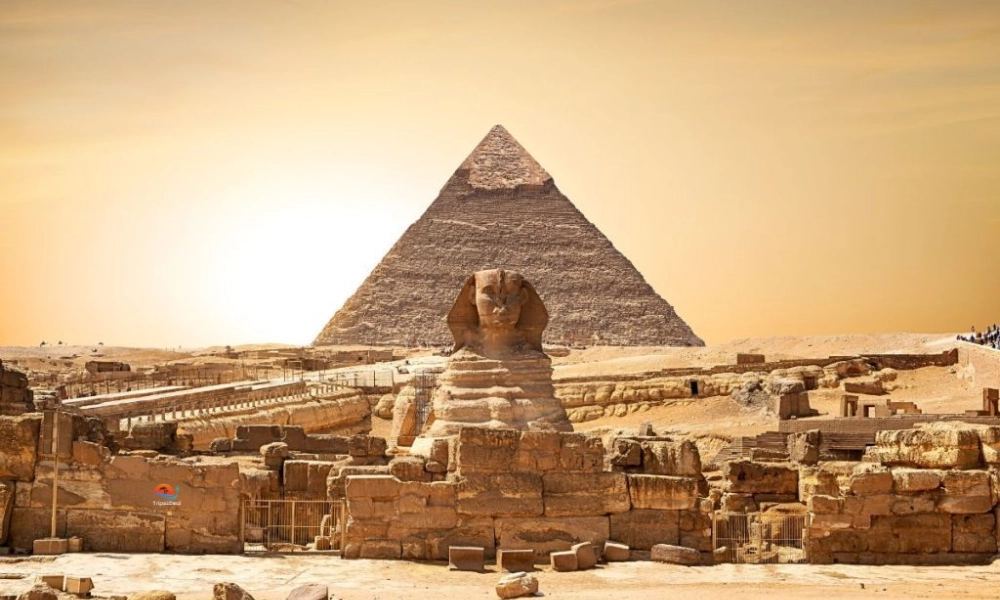
It seems like the Sphinx keeps making more questions than it answers. Who ordered the building? Was it Khufu, Pharaoh Khafre, or someone else?
Is the erosion proof of a long-ago society, or can it be explained by the Nile flooding and desert winds? Because of these enquiries, the Sphinx will always be interesting to both historians and regular people. This supports its status as one of the most widely studied monuments in the world.
The Great Sphinx of Giza is just a symbol of architectural expertise and artistic professionalism. This is a live example of Egypt, where people from all over the world show their interest in seeking this icon. This is considered part of the World Heritage Site as the Necropolis, where researchers can obtain detailed information about the respective spot. Each year, people visit the Giza Plateau to see the well-known Sphinx.
In spite of its location, the Sphinx has become a lasting image of Egypt.
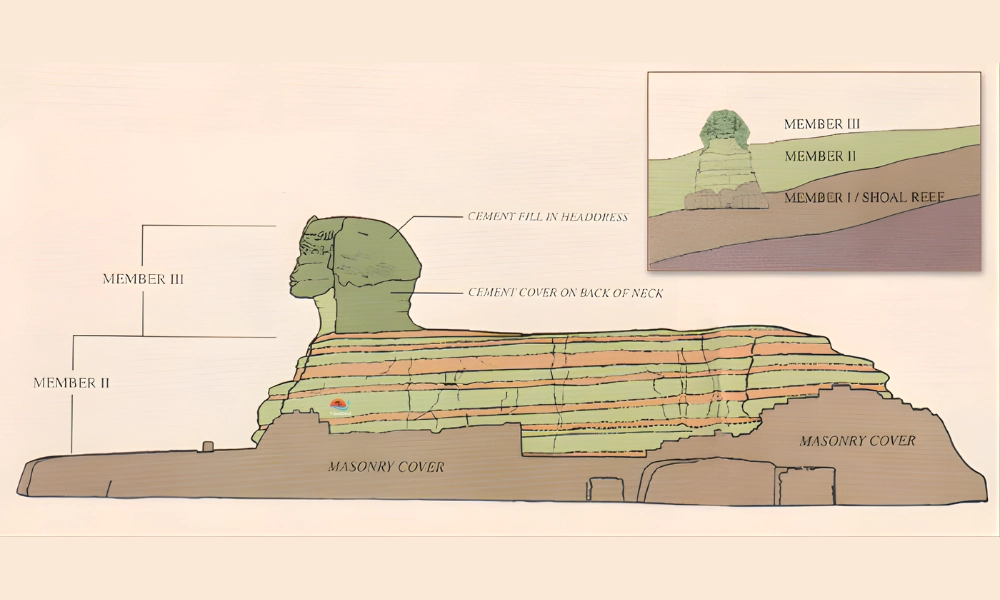
The Great Sphinx is still in danger of going extinct, even though it has been around for more than 4,500 years. Both people and natural forces are still breaking down this huge guardian of Giza. Its surface is being worn away by strong desert winds and changing sands, among other natural forces.
In the past, people have broken things, like shaving off its beard and breaking its face.
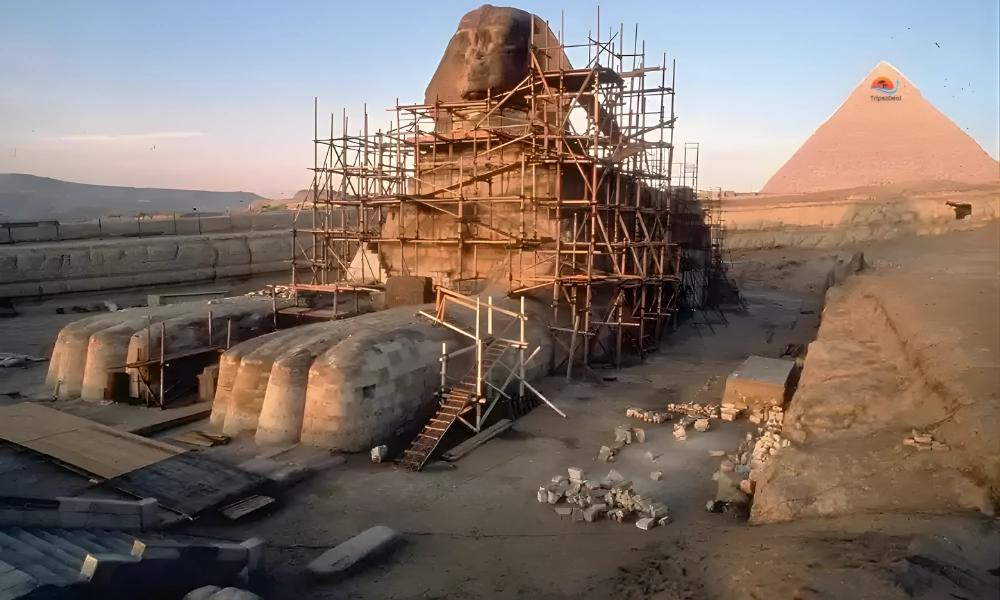
Egypt's Ministry of Antiquities and UNESCO have started major repair projects to protect the Sphinx. These projects include strengthening the Sphinx's fragile stone slabs.
To lessen the damage from salt, the surface needs to be cleaned.
These initiatives are essential for achieving a balance between accessibility and preservation, ensuring that future generations can continue to appreciate the wonders of ancient Egypt.
If you’re curious to know about the most ancient monument in the world, meet the Great Pyramid of Khufu. Understanding the history of the Pyramid of Khafre and Menkaure, both the Sphinxes are very significant.
Wrapping Up: How the Great Sphinx of Giza Still Holds Significance
If you are a history seeker, explorer, or visitor, make the Great Sphinx of Giza a top priority in your visit. This is actually a history, tradition, and culture more than a statue. The epitome of ancient Egyptian engineering, spirituality, and artistic skill. The advanced technology of Pyramid’s protective framework makes it more representative and iconic for the whole world. This statue is all about suspense, curiosity, and efforts to find the truth behind it.
For art lovers, this pastes a design of a whole experience in mind as a never forgettable memory. It gives them access to the world of the pharaohs. They have a lasting relationship with one of the greatest civilisations in human history as a result of this exposure.
© 2025 trips2deal. All rights reserved